Analysis by Mark T. · Reviewed 2026-07-06 · 12 min read
IPTV delivers live television and on-demand content over your home internet connection rather than through a traditional cable or satellite signal.
You've probably seen the term "IPTV" floating around forums, Reddit threads, and streaming communities. The question "how does iptv work" comes up constantly because the technology feels like magic compared to traditional cable. But it's actually straightforward once you understand the core mechanism.
IPTV stands for Internet Protocol Television. Instead of broadcasting signals through coaxial cables or satellite dishes, it sends video content as data packets over your existing internet connection. This is the same technology that powers Netflix and YouTube, but applied to live television channels. The key difference is that IPTV streams channels in real time using a protocol called IP multicast, which is more efficient for live broadcasts than the standard HTTP streaming used by on-demand services.
This guide will walk you through exactly how IPTV functions, what you need to get started, the real pros and cons, and whether it's a viable replacement for cable television. We'll also address the legal landscape, common technical issues like buffering, and how to set everything up on devices like Firestick and Smart TVs.
What Is IPTV and How Is It Different from Cable?
To grasp how does iptv work, you need to understand the fundamental difference in delivery method. Traditional cable television sends a continuous signal to your home, and your TV tuner filters out the channel you want from that stream. It's like having every channel broadcast simultaneously, and your device just picks one frequency.
IPTV takes the opposite approach. Your device requests a specific channel or piece of content from a server, and the server sends only that content to you. This unicast or multicast delivery is much more bandwidth-efficient on the provider's end and allows for interactive features like pause, rewind, and catch-up TV that cable simply cannot do natively.
Most IPTV services use a combination of live streaming (for channels) and video-on-demand (VOD) libraries for movies and shows. The video is encoded using codecs like H.264 or H.265 and packaged into segments that your device reassembles in real time. This is why a stable internet connection is non-negotiable for a good experience.
How Does IPTV Work Step by Step
Related Reading: Real Synadentix Review 2026 - 60-Day Test Results
The technical flow behind IPTV is surprisingly simple once you break it down. Here is the exact process that happens every time you change a channel or start a movie through an IPTV service.
Step 1: Content Acquisition and Encoding
The IPTV provider captures live television signals from satellite feeds, local antennas, or direct fiber connections. This raw video is then encoded into a digital format using compression algorithms. H.265 (HEVC) is the current standard because it delivers 4K quality at roughly half the bitrate of older codecs. The encoded streams are stored on servers or broadcast directly via multicast.
Step 2: Middleware and EPG Integration
The provider runs middleware software that manages user authentication, channel lists, and the Electronic Program Guide (EPG). When you open your IPTV app, it contacts this middleware to verify your subscription and download the current channel lineup. The EPG shows what is playing now and upcoming, just like a cable guide.
Step 3: Content Delivery via CDN
IPTV providers use Content Delivery Networks (CDNs) to distribute video streams globally. CDNs cache content on servers physically closer to you, reducing latency and buffering. When you select a channel, your device connects to the nearest CDN edge server, not the provider's main server. This is critical for delivering smooth 4K and FHD streams.
Step 4: Player Decoding on Your Device
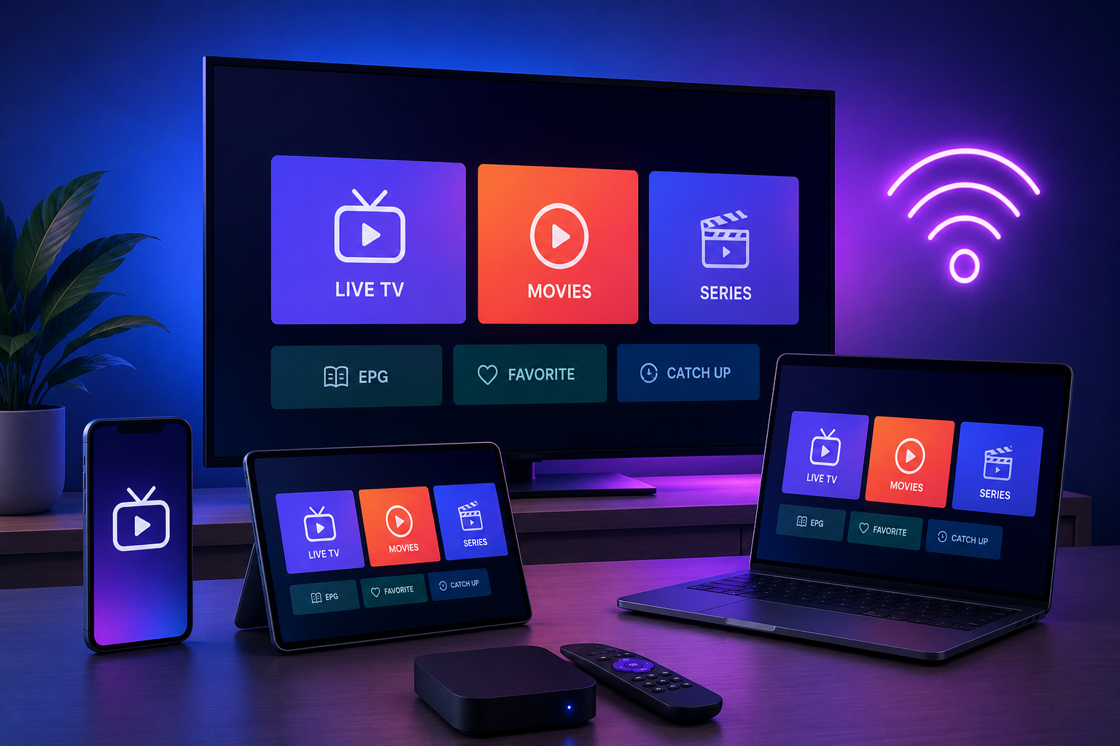
Your device — whether it is a Firestick, Smart TV, Android box, or phone — receives the video packets and decodes them using a media player like VLC, IProTV, or TiviMate. The player handles buffering management, audio sync, and subtitle rendering. Most modern IPTV apps also support timeshift functionality, letting you pause live TV.
This entire chain from server to screen takes less than 500 milliseconds on a properly configured system. That is faster than traditional cable in many cases, especially for channels with regional restrictions bypassed via VPN.
Concrete Benefits for Real Users
Switching to IPTV offers tangible advantages over cable that go beyond just cost savings. Here is what actual users report after making the switch.
Cost efficiency. A typical IPTV subscription costs between $10 and $20 per month compared to $80 to $150 for comparable cable packages. You are paying for content delivery infrastructure rather than local broadcaster fees and franchise taxes that cable companies pass to consumers.
Channel flexibility. Most IPTV services offer 10,000 to 20,000 channels including international content from every region. You can watch live sports from Europe, news from Asia, and entertainment from Latin America all from the same interface. Cable providers typically cap international options to a few dozen channels.
Device portability. Your subscription works on any compatible device with an internet connection. Start watching on your living room TV, pause, and continue on your phone in the bedroom. Cable boxes are tied to physical hardware in specific rooms unless you pay for additional receivers.
No long-term contracts. Reputable IPTV services operate on monthly or quarterly billing without early termination fees. If you are unsatisfied, you cancel and move on. Cable companies often require 12-24 month commitments with penalties for early cancellation.
Video quality control. Many IPTV providers offer adaptive bitrate streaming that adjusts quality based on your connection speed. Cable delivers a fixed bitrate regardless of network congestion. On fiber connections, IPTV can outperform cable in both resolution and stability.
Honest Limitations You Should Know
Related Reading: How to Start a Self Sufficient Backyard in Simple Steps
No technology is perfect, and IPTV has real drawbacks that honest reviews must address. Understanding these before subscribing saves frustration.
Internet dependency. Your entire viewing experience relies on your home internet connection. If your ISP goes down, so does your TV. Cable television can still work during internet outages because it uses a separate physical infrastructure. A minimum of 25 Mbps is required for stable HD streaming, and 50 Mbps for 4K content.
Buffering during peak hours. Even with fast internet, IPTV streams can buffer during evening hours when your ISP experiences congestion. This is especially noticeable with live sports where buffering can cause you to miss critical moments. Using a wired Ethernet connection instead of Wi-Fi significantly reduces this issue.
Service reliability varies. Unlike established cable companies, many IPTV providers operate in a gray legal area and can disappear overnight. Your subscription could become worthless with no refund if the provider shuts down. Sticking with services that have been operating for years and have active communities on Reddit reduces this risk.
Customer support is often minimal. Most IPTV services do not have phone support. You get email ticketing or Telegram groups. Technical issues that require immediate attention can be frustrating to resolve through these channels.
Interface learning curve. IPTV apps are not as polished as cable interfaces. Setting up EPG sources, configuring buffer sizes, and troubleshooting codec issues requires some technical comfort. Non-technical users may find the initial setup challenging.
IPTV vs Cable: Which Is Better for You?
The debate of iptv vs cable which is better depends entirely on your priorities. Here is a direct comparison of the key factors that matter most to viewers.
| Factor | IPTV | Cable TV |
|---|---|---|
| Monthly cost | $10–$20 per month | $80–$150 per month |
| Channel count | 10,000–20,000 channels | 200–500 channels |
| Contract required | No contract, monthly cancel | 12–24 month contracts often required |
| Video quality | Up to 4K adaptive streaming | 1080p fixed bitrate |
| Internet dependency | 100% dependent | Independent of internet |
| Device compatibility | Smart TVs, phones, tablets, PCs | Proprietary cable box only |
| DVR / Catch-up | Built into many services | Extra fee for DVR box |
| Legal clarity | Gray area for many providers | Fully regulated and licensed |
IPTV wins on cost, channel variety, and flexibility. Cable wins on reliability, legal clarity, and simplicity. If you are comfortable with some initial setup and want to save hundreds per year, IPTV is the clear choice. If you want a set-it-and-forget-it experience with zero technical involvement, cable remains easier.
⚠️ Limited Inventory Notice: Review live stock availability, promotional bundle milestones, and open checkout routes.
CLAIM SPECIAL OFFER →
Who Should Use IPTV? Real User Profiles
Related Reading: Exploring Cheap IPTV Subscriptions - A Practical Case Study
IPTV is not for everyone, but it fits specific user profiles perfectly. Here are the people who benefit most from switching.
Cord-cutters saving money. If you are paying $120+ per month for cable and only watch a fraction of the channels, IPTV reduces your bill by 80% while giving you more content. This profile represents the majority of IPTV adopters.
International viewers. Expats and immigrants who want live channels from their home country find IPTV invaluable. Cable rarely offers comprehensive international packages, while IPTV includes channels from India, the Middle East, Latin America, Europe, and Africa in one subscription.
Live sports enthusiasts. Fans looking for the best iptv service for live sports benefit from services that aggregate multiple sports packages. You can watch Premier League, NFL, NBA, UFC, and cricket from different countries without juggling multiple streaming subscriptions.
Tech-savvy streamers. People comfortable with Firestick setup, APK installation, and basic network troubleshooting will have a smooth experience. If you have ever sideloaded an app or changed DNS settings, you can handle IPTV setup.
Frequent travelers. IPTV works anywhere with an internet connection. Travelers can bring their subscription on vacation and access their home channels from hotel Wi-Fi or mobile hotspots. Cable boxes are geographically locked to your home address.
How to Get Started with IPTV in 7 Steps
Setting up IPTV on your own devices is straightforward if you follow a methodical approach. This step-by-step guide covers the most common setup for Firestick and Android TV, which account for over 70% of IPTV usage.
Step 1: Choose a reliable IPTV provider
Research services with at least two years of operation and active communities on Reddit or Trustpilot. Look for providers that offer free trials or 24-hour test access. Do not commit to long subscriptions without testing the service on your specific internet connection.
Step 2: Prepare your device
For Firestick, enable "Apps from Unknown Sources" in Developer Options. For Android TV, allow installation from unknown sources. For Smart TVs, check if your TV supports IPTV apps natively or use an external HDMI dongle. Understanding how does iptv work on smart tv requires knowing that most Samsung and LG TVs need an app like Smart IPTV or SSIPTV.
Step 3: Install an IPTV player app
Download TiviMate, IProTV, or VLC Media Player. These apps handle the decoding and interface. TiviMate is widely considered the best premium player with EPG support and catch-up features. Install it via Downloader app on Firestick using the official URL from the developer.
Step 4: Enter your subscription details
Your provider will send you a playlist URL (M3U link) or an Xtream Codes API login. Open your IPTV player and add this information. The player will fetch your channel list automatically.
Step 5: Configure EPG
The Electronic Program Guide shows what is currently playing and scheduled. Most providers include an EPG URL with your subscription. Add it to your player settings. Without EPG, you only see channel names without program information.
Step 6: Optimize buffering settings
In your player settings, set buffer size to "Large" or 10-20 seconds for live content. This preloads enough video to handle minor network fluctuations without freezing. For VOD content, standard buffer is fine. Check our iptv buffering fix guide if you experience stuttering.
Step 7: Test and troubleshoot
Watch different channels during peak evening hours. Test sports channels specifically as they are the most bandwidth-intensive. If you experience buffering, try connecting via Ethernet instead of Wi-Fi, or use a VPN to prevent ISP throttling of streaming traffic.
Is IPTV Legal in the US and Other Regions?
The question "is iptv legal in the us" has a nuanced answer. IPTV technology itself is completely legal. The legality depends entirely on what the provider is streaming and whether they have proper licensing for that content.
In the United States, IPTV services that carry copyrighted content without permission from the copyright holders operate in a legal gray area. The law targets the providers who distribute unlicensed content, not the end users who consume it. However, users can face legal notices in rare cases, especially in countries with strict copyright enforcement like Germany and the UK.
To stay safe, use IPTV services that only stream content in the public domain or have proper licensing agreements. Alternatively, combine IPTV with a VPN to encrypt your traffic. VPNs are legal in most countries and protect your privacy regardless of what you are streaming. The provider bears the legal risk, not the viewer, but regional laws vary widely.
Pros and Cons at a Glance
Pros
- Up to 80% cheaper than cable
- 10,000+ channels including international content
- Watch on any device anywhere
- No long-term contracts
- Built-in catch-up TV and VOD libraries
- 4K and HDR support on modern providers
Cons
- Requires stable high-speed internet
- Buffering during peak network congestion
- Providers can disappear without notice
- Limited customer support options
- Technical setup required for best experience
- Legal gray area for many services
how does iptv work
Compare retail cost-to-value allocation grids and complete zero-risk hardware warranties.
BUY NOW →Frequently Asked Questions About IPTV
Factual Clarifications (FAQ)
How does IPTV work on smart TV without a separate box?
Most smart TVs running Tizen (Samsung) or webOS (LG) can install IPTV apps directly from their app stores. Samsung users can download Smart IPTV or SSIPTV, while LG users have access to SSIPTV and Net IPTV. These apps accept M3U playlist URLs and Xtream Codes just like dedicated players. However, smart TV processors are often slower than external devices, so expect occasional interface lag. For the smoothest experience, many users still prefer a dedicated Firestick or Android box connected via HDMI.
What is the best IPTV service for live sports with minimal buffering?
Services that specialize in sports typically invest more in CDN infrastructure and have dedicated servers for high-bitrate events. Look for providers that offer a free trial specifically for testing sports channels. The best services maintain multiple backup streams for major sporting events so if one server overloads, your player automatically switches to another. Reddit communities in r/IPTV and r/TiviMate frequently discuss current reliable options, but check recent threads as provider quality changes rapidly.
How to set up IPTV on Firestick step by step?
Go to Settings > My Fire TV > Developer Options > Enable Apps from Unknown Sources. Install the Downloader app from the Amazon Appstore. Open Downloader and enter the URL of your IPTV player APK (TiviMate is recommended). Install the APK, then open the player and select "Add Playlist." Enter the M3U URL or Xtream Codes provided by your subscription. After the channels load, add the EPG URL for program guides. Set buffer size to large in settings. This whole process takes about 10 minutes.
IPTV vs cable which is better for watching live news?
For live news, cable traditionally has the edge because news channels maintain constant uptime and you do not worry about buffering during breaking events. However, IPTV can provide access to international news channels that cable simply does not carry. If you primarily watch domestic news like CNN, Fox News, or BBC, cable is more reliable.