By Sarah M. · Updated 2026-06-29 · 12 min read
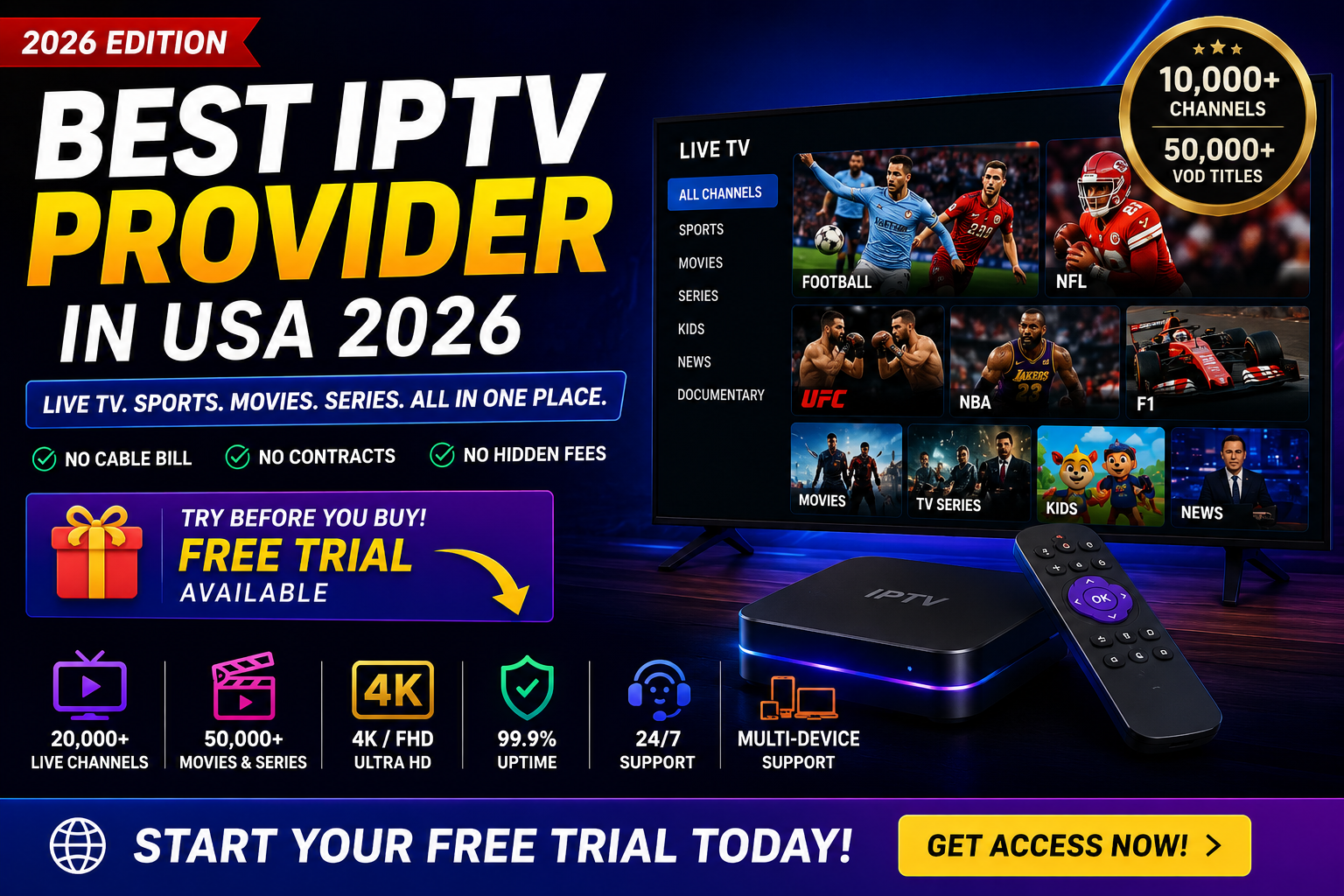
You have likely heard about IPTV subscription services, but you may not be sure what they actually include, how they differ from cable or streaming apps, or whether one is right for your household. This guide answers those questions directly and gives you a honest, step-by-step look at the technology, the trade-offs, and the real-world experience of using an IPTV service today.
Whether you are looking for an affordable way to watch live sports, international news, or on-demand movies, understanding how IPTV works and where to find a reliable provider is essential. We will cover everything from definitions to practical setup steps, and we will point you toward a service worth considering if the time comes to make a choice.
What Is an IPTV Subscription Service Exactly?
IPTV stands for Internet Protocol Television. Instead of receiving TV signals through a satellite dish, a cable line, or an over-the-air antenna, an IPTV subscription service delivers television content over your internet connection. Think of it like watching YouTube or Netflix, but with hundreds of live channels, sports packages, and international programming included in one plan.
The service uses your existing broadband connection to stream video in real time. You do not need a set-top box from a cable company. Instead, you use an app on a smart TV, Android box, Fire Stick, phone, or computer. The content is delivered as data packets, just like any other internet stream, but it is organized into a channel lineup that mimics traditional television.
Related entities include electronic program guides (EPGs), video on demand (VOD), catch-up TV, and channel lists. Many providers also offer premium sports packages, adult content filters, and multi-device support. The core idea remains the same: television over IP.
How an IPTV Subscription Service Works Step by Step
Related Reading: Comparing IPTV Subscription Services: Which One Works for You?
Understanding the nuts and bolts helps you avoid confusion when setting up your service. Here is the process from sign-up to watching your first channel.
- Choose a provider: You select an IPTV subscription service that fits your budget and channel preferences. Most providers offer monthly, quarterly, or yearly plans.
- Receive login credentials: After payment, the provider sends you a username, password, or M3U playlist URL via email. You may also get a portal URL for certain apps.
- Install an IPTV player app: You need an app on your device to load the channel list. Popular apps include TiviMate, IPTV Smarters Pro, GSE Smart IPTV, and VLC Media Player.
- Enter the playlist or portal: In the app, you paste the M3U URL or portal link provided by your service. The app downloads the channel list and electronic program guide.
- Browse and watch: The EPG shows you what is playing on each channel. You can scroll through categories like Sports, News, Entertainment, or Movies and click to start streaming.
Most modern IPTV subscription services also offer built-in VOD libraries, so you can watch movies and TV shows on demand without leaving the app. The entire setup takes less than ten minutes.
Concrete Benefits for Users
Why are millions of cord-cutters switching to IPTV? Here are the biggest real-world advantages.
- Cost savings: An IPTV subscription service typically costs $10 to $25 per month, compared to $80 to $150 for cable or satellite. Even premium sports packages are cheaper.
- Massive channel selection: You often get 2,000 to 10,000 channels, including international content from India, the Middle East, Europe, Latin America, and Africa.
- Device flexibility: Watch on your TV, tablet, phone, laptop, or even a gaming console. Most services allow three to five simultaneous connections.
- On-demand libraries: Many providers include thousands of movies and TV series in their VOD section, updated regularly.
- Free trial availability: Legitimate providers offer a 24-hour to 7-day free trial so you can test channel quality and stability before committing.
These benefits make IPTV especially attractive for households that watch a lot of live sports, news from multiple countries, or niche content that cable packages do not carry.
Honest Limitations You Should Consider
Related Reading: Free Discord Nitro Compared: Trials vs Real Offers
No technology is perfect. Before you buy an IPTV subscription service, understand these drawbacks.
- Internet dependency: If your internet goes down or is too slow (below 25 Mbps for HD), your TV goes dark. Cable and satellite work during outages.
- Legal gray areas: Many IPTV services operate without proper licensing. Using an unverified provider could expose you to legal risk or service shutdowns.
- Variable reliability: Server overload during major events (like a championship game) can cause buffering or freezing. Not all providers have robust infrastructure.
- No native integration: Unlike cable boxes, IPTV requires a separate app. Some smart TVs do not support all IPTV apps, so you may need an external device like a Fire Stick.
- Customer support: Support is often via email or Telegram, not phone. Response times vary widely between providers.
Being aware of these issues helps you set realistic expectations and choose a provider that minimizes them.
IPTV vs. Cable vs. Streaming Services: A Practical Comparison
The table below compares an IPTV subscription service with traditional cable and popular streaming apps. Use it to decide which option fits your viewing habits.
| Criteria | IPTV Service | Cable TV | Netflix / Hulu |
|---|---|---|---|
| Monthly cost | $10–$25 | $80–$150 | ✓ $7–$20 |
| Live channels | ✓ 2,000–10,000 | 100–300 | None (mostly on-demand) |
| Sports packages | ✓ Included | Extra $30–$60 | Limited |
| Device flexibility | TV, phone, tablet, PC | Only TV | ✓ All devices |
| Requires internet | Yes | No | Yes |
| Legal certainty | Varies | ✓ Fully licensed | ✓ Fully licensed |
As the table shows, IPTV wins on channel count and price but loses on legal certainty and reliability. The best choice depends on your priorities.
✓ Pros
Extremely affordable monthly plans
Thousands of channels including rare international content
Watch on any device with internet
✗ Cons
Dependent on stable high-speed internet
Legal status varies by provider
Buffering during peak times
Resource mentioned in this article
iptv subscription service
Independent review and details
Find out more about iptv subscription service →
Who Is an IPTV Subscription Service For?
Related Reading: I Tried Free PlayStation Gift Cards for 30 Days — Here Is What Really Happened
Not everyone should switch to IPTV. Here are the user profiles that benefit most.
- The cord-cutter on a budget: If you are tired of paying $120+ per month for cable and watch mostly live TV, IPTV is a no-brainer.
- The sports fanatic: You want every NFL game, Premier League match, UFC fight, and NBA playoff without paying for separate sports packages. Many IPTV services include all sports channels in one plan.
- The international viewer: You need channels from your home country — Indian, Arabic, Filipino, Turkish, or Latin American content — that standard cable does not offer.
- The tech-savvy user: You are comfortable installing apps, copying URLs, and troubleshooting minor streaming issues. If you prefer plug-and-play simplicity, cable may be easier.
- The multiple-device household: You want to watch different channels in different rooms, on different devices, simultaneously without paying for additional cable boxes.
If you recognize yourself in any of these descriptions, an IPTV subscription service is likely a good fit.
How to Get Started with an IPTV Subscription Service — Practical Steps
Follow these steps to start streaming safely and reliably.
- Check your internet speed: Run a speed test. You need at least 25 Mbps for HD streaming and 50 Mbps for 4K. For a family with multiple simultaneous streams, 100 Mbps is ideal.
- Choose a reputable provider: Look for providers with a free trial, responsive support, and positive reviews on independent forums like Reddit. Avoid services that require cryptocurrency-only payments or have no trial option.
- Use a VPN for privacy: A VPN encrypts your traffic and hides your IP address. This is especially important if you live in a country where unlicensed IPTV is actively monitored.
- Pick your device: The best experience comes from an Android TV box, Amazon Fire Stick, or NVIDIA Shield. Smart TV apps work but may have less polish.
- Install the player app: Download TiviMate (preferred for Android TV) or IPTV Smarters Pro. Follow the app's setup wizard to enter your M3U URL or portal.
- Test the free trial: Use the trial period to check channel availability, video quality, and EPG accuracy. Test at different times of day.
- Subscribe if satisfied: Choose a monthly plan first. Avoid long-term commitments until you are confident in the service.
Starting with a free trial is the best way to verify that the service meets your expectations without financial risk.
Compare with alternatives
Check out iptv subscription service →
Tips for Finding a Reliable IPTV Service
Many people ask, "where to find reliable iptv service?" The answer is not always straightforward. Here is what separates trustworthy providers from fly-by-night operations.
Look for transparent pricing. Legitimate services publish their prices clearly on their website. If a provider hides pricing until you contact them, that is a red flag. Similarly, avoid services that cost less than $5 per month — they likely cannot afford proper server infrastructure.
Check Reddit and review communities. Searching for "iptv subscription service review reddit" will bring up real user experiences. Pay attention to comments about uptime, channel stability, and customer support responsiveness.
Demand a free trial. Any reputable provider offers at least a 24-hour free trial. Use this time to test buffering during evening hours when server load is highest. If the service buffers during the trial, it will buffer after you pay.
Verify EPG coverage. An electronic program guide that is incomplete or inaccurate reduces the value of the service. Good providers have at least 90% EPG coverage across major channels.
How to Buy an IPTV Subscription Safely
Safety is a legitimate concern, especially given the legal gray areas. To "how to buy iptv subscription safely," follow these guidelines.
- Use a separate email address: Avoid using your primary email for IPTV sign-ups. Many providers resell customer data.
- Pay with a virtual card or crypto: Some providers accept credit cards, but using a one-time virtual card or cryptocurrency adds a layer of anonymity.
- Never share personal details: A legitimate IPTV service does not need your full name, address, or phone number. If a form asks for these, leave them blank or use fake information.
- Read the terms carefully: Unscrupulous providers may include clauses allowing them to share your data. If the terms are vague, walk away.
Following these steps reduces the risk of data breaches and unwanted follow-ups.
Is an IPTV Subscription Service Right for You?
An IPTV subscription service offers an incredible value proposition if you watch a lot of live TV, want international channels, and are comfortable with a bit of technical setup. The cost savings alone can be hundreds of dollars per year compared to cable. However, the experience depends heavily on choosing the right provider, having a solid internet connection, and accepting the legal uncertainties that come with the territory.
If you have read this far and feel ready to test the waters, start with a free trial from a provider that has positive community feedback and transparent pricing. That is the lowest-risk way to see if IPTV meets your needs.
For those looking for a balanced option that combines channel variety, competitive pricing, and responsive support, the service we have reviewed independently — iptv subscription service — is a strong candidate worth exploring.
Option featured in this guide:
Explore iptv subscription serviceAffiliate link — our editorial analysis remains independent.